Double Eyelid Surgery (Blepharoplasty) in Kuala Lumpur
Non-Surgical Asian Upper Blepharoplasty
Brighter, More Defined Eyes — Tailored to Your Natural Anatomy
Around half of Asians are born without a natural double eyelid crease — a simple anatomical difference, not something to fix, but often something people want to enhance. Whether you were born with a monolid, have an uneven crease, or want your eyes to look more open and awake, CLEO clinic offers both surgical and non-surgical blepharoplasty options tailored to your unique eye shape.
THE ORIGINAL "Scar-less" NON SURGICAL BLEPHAROPLASTY (DST TECHNIQUE)
What Is Double Eyelid Surgery?
Double eyelid surgery, medically known as Asian upper blepharoplasty, is a procedure that creates or refines a crease on the upper eyelid — either by threading a suture through small punctures (non-incisional) or through a fine incision that removes excess skin and fat (incisional) — making the eyes appear larger, more open, and more defined.
Why Some People Have Single Eyelids and Others Have Double Eyelids
The difference comes down to a small but important anatomical detail: the levator muscle, which lifts the eyelid open. In people with naturally double eyelids, a thin tissue attachment connects this muscle to the overlying skin — as the muscle contracts to open the eye, it tugs the skin inward, forming a visible crease.
When this attachment is weak, thin, or absent, the skin moves smoothly with no fold, resulting in a single eyelid, or monolid.
This isn’t a defect — it’s simply a variation in eyelid anatomy that’s especially common in people of Asian descent. Double eyelid surgery works by recreating or reinforcing that same attachment mechanism, whether through sutures or a surgical incision.
Surgical vs. Non-Surgical Double Eyelid Techniques
The two main approaches are the non-incisional (suture) technique, which uses fine stitches through small punctures with no visible scarring, and the incisional technique, which removes excess skin and fat through a small incision for a more permanent, well-defined crease — the right choice depends on your eyelid thickness, fat volume, and goals.
Non-Incisional (Suture) Technique
Fine sutures are threaded through small puncture points along the desired crease line and tied to connect the skin to the levator muscle, creating a natural fold without any cutting.
Best for: Thinner eyelid skin with minimal excess fat
Duration: Around 30-40 minutes
Benefits: No visible scarring, minimal downtime, natural-looking results
Longevity: Semi-permanent to long-lasting, depending on individual anatomy and skin elasticity over time
Incisional Technique
A fine incision is made along the proposed eyelid crease to remove excess skin and fat before the skin is secured to the underlying tissue, forming a well-defined, long-lasting fold.
Best for: Thicker eyelid skin, excess fat, or existing droopiness (ptosis)
Duration: Around 45-60 minutes
Benefits: Permanent crease, can simultaneously correct asymmetry or mild eyelid drooping
Longevity: Considered a permanent result
Both techniques are performed on an outpatient basis under local anesthesia, meaning you can go home the same day.
What Results Can You Expect?
Beyond the cosmetic enhancement, double eyelid surgery can offer:
Larger, more defined, and more awake-looking eyes
Improved facial symmetry and harmony
Correction of mild ptosis (droopy eyelids that partially obstruct vision), in appropriate cases
A long-term alternative to daily eyelid tape or glue
Boosted confidence in how your eyes present
Why Choose us at CLEO clinic
Double Eyelids DST is clinically proven, modern, non-incisional technique used to create and enhance double eyelids
Experienced Doctors: Our team comprises highly skilled aesthetic doctors trained in the latest techniques.
Advanced Technique: We utilize latest DST methods for precision and safety.
Personalized Care: Each treatment is tailored to meet your individual needs and goals.
Proven Results: Our satisfied clients attest to our commitment to excellence.
Suitable Double eyelid Candidates
Droppy Eyelids
Asymmetrical Eyelids
Semi Permanent
Minimally Invasive
Thin Eyelid Skin
Minimal Eyelid Fats
Your Double Eyelid Surgery Journey at CLEO clinic
1. Consultation — Our doctors assess your eyelid anatomy, skin thickness, fat distribution, and aesthetic goals to recommend the most suitable technique for you.
2. Preparation — You may be advised to pause blood-thinning medications or supplements about 1-2 weeks beforehand to minimize bruising, and to avoid smoking in the weeks surrounding your procedure.
3. The Procedure — Local anesthesia is applied for a comfortable experience. Depending on the chosen technique, the procedure takes approximately 30 to 60 minutes.
4. Recovery — Mild swelling and bruising are normal in the first week, typically peaking around day 2-3 before gradually subsiding. Many patients feel comfortable returning to light activities within a few days, with most swelling resolved by the two-week mark and final results settling over 2-3 months.
Recovery Timeline at a Glance
Timeframe
What to Expect
Day 2-3
Peak swelling and bruising
Day 3-7
Comfortable resuming light daily activities
Week 1-2
Majority of swelling resolves; light makeup usually permitted after 7-10 days
Week 2
Sutures removed if incisional technique (buried sutures dissolve internally)
2-3 Months
Final crease and results fully settle
Are There Risks?
Double eyelid surgery is considered very safe when performed by an experienced practitioner. Temporary swelling, bruising, mild discomfort, or slight asymmetry as swelling subsides are common and expected parts of healing. More serious complications, such as infection or abnormal lid positioning, are rare and are minimized significantly when the procedure is performed by trained, experienced doctors — which is why choosing an accredited clinic matters.
Is Double Eyelid Surgery Right for You?
You may be a good candidate if you:
Were born without a visible eyelid crease (monolid) and want a natural-looking fold
Have asymmetrical eyelids — one with a crease, one without
Experience droopy or heavy-looking eyelids that make your eyes appear smaller or tired
Currently rely on eyelid tape or glue daily and want a longer-term solution
Are in good general health, typically 18 years or older once facial growth has stabilized
A personalized consultation with our doctors will confirm which technique — or combination — best suits your eye anatomy and goals.
Why Book Double Eyelid Surgery at CLEO clinic?
CLEO clinic is a Ministry of Health–accredited aesthetic practice in Kuala Lumpur, with LCP-accredited physicians who personally assess every client’s eye anatomy before recommending a treatment plan.
MOH-accredited aesthetic clinic
LCP-certified physicians
Multiple locations across Sri Hartamas, Taipan USJ10, Kepong, and Cheras
Personalized consultation to match the right technique to your eyes
The suture (non-incisional) technique uses fine stitches through small punctures with no visible scar, best suited for thinner eyelids with minimal fat — while the incisional technique removes excess skin and fat through a small cut, offering a more permanent result and better suited for thicker eyelids or existing droopiness.
The procedure is performed under local anesthesia, keeping you comfortable throughout. Afterward, mild soreness, tightness, or swelling during the first week is normal and manageable.
Incisional double eyelid surgery is considered permanent. The non-incisional suture technique can also last for many years, though results may gradually soften over time depending on individual skin elasticity and aging.
Most patients feel comfortable resuming light activities within a few days. Visible swelling typically resolves significantly within 1-2 weeks, with final results settling over 2-3 months.
Most doctors recommend waiting until at least 18 years old, once facial growth has stabilized. There's no upper age limit — many older patients pursue the procedure to address both the lack of a crease and age-related eyelid changes at the same time.
In appropriate cases, yes — if drooping is caused by weakness in the levator muscle, the same procedure used to create the eyelid crease can also tighten and strengthen this muscle. Your doctor will assess whether this applies to your specific case during consultation.
When performed by an experienced doctor with attention to your natural eye shape, skin thickness, and facial proportions, results are designed to look like a natural crease rather than an artificial change — this is why a thorough consultation matters before choosing a technique.
Trusted by hundreds of satisfied clients
5⭐️ reviews on google
MEET OUR DOCTOR
Dr. Raimie Bin Rahmad
Aesthetic Physician
Doctor of Medicine (M.D.) – MMA
Professional Diploma in Aesthetic Medicine
LCP Accredited by MOH
Founder & Medical Director of Cléo Clinic
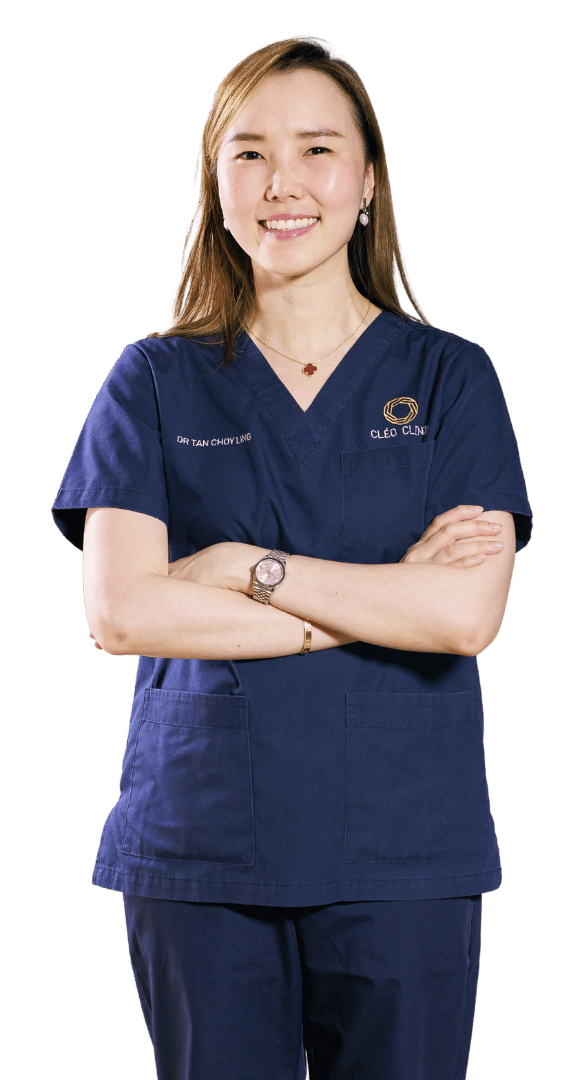
Dr. Tan Choy Ling
Aesthetic Physician
Doctor of Medicine (M.D.) – MMA
Postgraduate Diploma in Dermatology in Clinical Practice – University of South Wales, UK
Professional Diploma in Aesthetic Medicine – AAA
LCP Accredited by MOH
Co- Founder of Cléo Clinic
Dr. Seok Wye Kitt
Aesthetic Physician
M.D.(RSMU)
Postgraduate Medical Aesthetic Certification (MAC)
Medical Aesthetic International Certification (MAIC)
Clinical Director of Cléo Clinic
LCP Accredited by MOH
Dr. Amy Lau
Aesthetic Physician
M.D.(UKM)
Postgraduate Medical Aesthetic Certification (MAC)
Certificate in Aesthetic Medicine – American Academy of Aesthetic Medicine (AAAM)
Professional Diploma in Dermatology – Royal College Of Physician Of Ireland
LCP Accredited by MOH
Clinical Director of CLEO clinic Kepong
Dr. Sara Thong
Aesthetic Physician
MBBS.(Manipal)
Professional diploma in Aesthetic Medicine – IIWAM
Postgraduate Diploma In Dermatology In Clinical Practice – University Of South Wales, UK
LCP Accredited by MOH
Clinical Director of CLEO clinic Cheras
We use cookies to ensure that we give you the best experience on our website. If you continue to use this site we will assume that you are happy with it.