
Award-Winning LCP-Certified Aesthetic Clinic – Get Your FREE Skin Assessment Now!
Quick answer: Exosome treatment uses tiny vesicles, usually 30 to 150 nanometres across, that cells release to send repair signals. Exosome products are prepared in a laboratory and contain no whole cells. Early studies suggest they may support skin quality, texture and hair density, but human evidence is still small and short-term. Exosome products are not FDA-approved for skin or hair treatment. A doctor should assess your skin or scalp before treatment, and the price depends on the product, route and number of sessions.

CLEO clinic®
Exosome Therapy
Skin Rejuvenation & Hair Restoration
At CLEO clinic in Kuala Lumpur and Selangor, exosome treatment is part of our medically supervised regenerative aesthetics programme. Every treatment starts with an in-person assessment at our Sri Hartamas, Taipan Subang Jaya, Kepong and Cheras branches.





Exosome therapy is a treatment that uses exosomes, the small vesicles that cells release to communicate with each other. Exosomes carry proteins, lipids and genetic messengers such as microRNA. They signal nearby cells to support repair, collagen activity and follicle health. A 2020 review in PubMed Central describes exosomes as nano-sized vesicles that carry these molecules between cells.
Many products are described as coming from stem cells. Exosomes are not stem cells, and they contain no whole living cells. Sources, isolation methods and purity vary between products, so the product itself matters as much as the treatment. To compare the options, read exosome vs PRP. For skin booster basics, read what a skin booster does.
Exosomes are taken up by nearby cells, where their contents can influence how those cells behave. In laboratory studies, this has been linked to:
Most of this evidence comes from laboratory and animal studies, so these mechanisms are hypotheses for human benefit, not proven outcomes. A systematic review and meta-analysis in PubMed Central describes exosomes’ potential in a range of conditions and notes that human data are still limited.
Many exosome products are derived from mesenchymal stem cells, including those from adipose (fat) tissue, called ADMSC exosomes. The source affects the molecular content, so products from different sources are not directly comparable. Ask your clinic which source the product uses and how it was made.
Because exosome products are not yet standardised, quality checks matter. Before you agree to treatment, ask for:
For warning signs to report after treatment, see the Safety, Side Effects and Who Should Avoid Exosome Therapy section on this page. To check any medical product, read how to avoid counterfeit products.
Exosome treatment is studied mainly for skin quality and hair density. The evidence is strongest for skin quality and early-stage for hair.
Early clinical reports describe improvements in skin texture, firmness and hydration over a course of sessions. Results are gradual, and they depend on the product, the delivery method and your skin. Exosome treatment is best used as a skin-quality option, not as a replacement for established treatments.
Studies in aesthetic medicine suggest possible benefits for fine lines, uneven texture and skin ageing, but the trials are small and short-term. Exosomes are often combined with microneedling, and results are judged over several weeks. For the microneedling option offered at CLEO clinic, see the microneedling treatment page.
Early studies suggest exosomes may support the skin's repair processes, with gradual improvements in texture and tone over a course of sessions.
Treatment is usually a short in-clinic session. Mild redness or swelling typically settles within a few days, and most people return to daily activities the same day.
Early reports describe support for the skin's natural repair response. A doctor can advise whether it suits your skin, including after laser, microneedling or irritation.
Early studies report possible improvements in hair density and thickness. High-quality trials are still limited, so it is best discussed alongside proven hair loss treatments.
Exosomes contain no whole cells, so the risk of immune rejection is considered lower than with cell-based therapies. Product quality and sterility still matter.
PRP uses your own platelets and has more clinical history, especially for hair loss. Skin boosters such as Rejuran use polynucleotides with more aesthetic data than exosomes. Exosomes need no blood draw, but they have the least human evidence of the three. There is no reliable head-to-head trial showing one is clearly better, so claims that one is stronger should be treated with caution. Read exosome vs PRP: which is better for you and the Rejuran treatment page for a fuller comparison.
| Feature | Exosome Therapy | PRP (Platelet-Rich Plasma) | Skin Booster (Rejuran PDRN) |
|---|---|---|---|
| What it is | Cell-derived vesicles that carry repair signals | Concentrated platelets prepared from your own blood | Polydeoxyribonucleotide (PDRN), a DNA-derived ingredient injected into the skin |
| Source | Lab-prepared; sources and purity vary by product | Your own blood | Purified DNA fragments, usually salmon-derived |
| Blood draw needed? | No | Yes | No |
| Main uses discussed | Skin quality and hair density | Hair loss and facial rejuvenation | Skin quality, hydration and acne scars |
| Typical downtime | Usually minimal; redness or swelling for a few days | Usually minimal; redness or swelling for a few days | Usually minimal; small bumps or redness for a few days |
| Level of human evidence | Least of the three | Moderate, with mixed results | Most of the three for aesthetic use |
| Regulatory status | Not FDA-approved for skin or hair; products not standardised | Autologous procedure; protocols vary by clinic | Product-specific registration; check the NPRA registration of the product used |
| Key caution | Product quality, source and sterility are hard to verify | Results depend on preparation and technique | Dosing and product vary by brand; allergy to fish or salmon should be checked |


What to Expect: Sessions, Results and Downtime
Step-by-Step Treatment
Consultation: your doctor reviews your skin or scalp, medical history, medicines and goals, and checks whether you are suitable.
Preparation: the area is cleansed, and numbing cream is usually applied first if needed.
Application: the exosome product is delivered by microneedling, microinjection or scalp microinjection, depending on your concern and your doctor’s plan.
Recovery: most people go home the same day. Follow the aftercare advice your clinic gives you.
Session length depends on the area and method. Some clinics describe a session of around 30 minutes, so ask your clinic what to expect.
How Many Sessions Are Needed?
Exosome treatment is usually planned as a course, followed by maintenance where needed. Some clinics plan a course of around three to four sessions spaced two to four weeks apart, with maintenance every few months to a year. Your own plan depends on the concern, the area, the delivery method and how your skin or scalp responds. Your doctor will set the plan at consultation and review progress before recommending more sessions.
Delivery Methods
Microneedling: creates micro-channels so the product can reach the dermis.
Microinjection: places the product directly into the target layer, with more control over depth.
Scalp microinjection: used for hair concerns, with placement planned by the doctor.
Neither method has been shown to be superior in a large trial, so your doctor will explain which is used and why.
Results Timeline
Exosome results build gradually because the body does the repair. As a rough guide:
2 to 4 weeks: some people notice improved texture and less dryness or flaking.
1 to 3 months: firmer-looking skin and, for hair, early changes in density are judged.
3 to 6 months: the collagen remodelling that drives most skin changes is judged. Hair results need several months because follicles grow in slow cycles.
Results vary between people. Judge the outcome at the end of the course, using photos in the same light and angle.
Downtime and Recovery
Most people have little downtime. Mild redness, swelling or small bumps are common for a few days after microneedling or injection. Clinics commonly advise:
Makeup: avoid it for about 12 to 24 hours, or as your clinic advises, to reduce irritation while the skin recovers.
Exercise and sweating: avoid strenuous exercise and heavy sweating for about 48 hours.
Heat and actives: avoid saunas, very hot showers and harsh actives for the advised period.
Follow your clinic’s aftercare instructions. For aftercare detail, read the skin booster aftercare guide and the what to avoid after Pico laser guide.
Safety, Side Effects and Who Should Avoid Exosome Therapy
Human safety data are limited and mostly short-term. Common effects include redness, swelling, tenderness and small bruises at the treatment site. Rarer risks that cannot be ruled out include infection, contamination, reactions to product components, lumps and pigment change, especially in darker skin.
Exosomes contain no whole cells, so immune rejection of cells is considered less likely than with cell-based treatments. This does not make them risk-free, because product quality, sterility and technique still matter.
Speak to a doctor before treatment if you:
Are pregnant or breastfeeding
Have an active skin infection, open wound or active acne in the treatment area
Have a history of keloid or hypertrophic scarring
Have a bleeding disorder or take blood thinners
Have an autoimmune condition or take medicines that suppress the immune system
Have had isotretinoin recently, or a recent laser, peel or procedure in the same area
For the full list of warning signs, see the Safety, Side Effects and Who Should Avoid Exosome Therapy section on this page.
Regulatory Status
Exosome products are not approved by the US Food and Drug Administration for skin or hair treatment, and no standard exists yet for their production. We have not verified the registration status of any exosome product with the National Pharmaceutical Regulatory Agency (NPRA) in Malaysia. Before treatment, check the product name and batch number against the NPRA Quest3+ database, and ask your clinic for documentation.
Exosome Treatment Cost in Malaysia
We do not quote a price for exosome treatment, because reliable published averages have not been verified. The cost depends on the treatment area, the number of sessions, the delivery method and the product. Ask for an itemised written quote that names the product, the sessions and the aftercare included. For context on similar treatments, see the acne scar cost guide and the PRP hair loss cost guide.
Is Exosome Therapy Right for You?
Exosome therapy may be discussed if you want an emerging, cell-free option for skin quality, scars or early hair concerns, and you understand that the evidence is still developing.
It may suit you if you have:
Early to moderate skin ageing, such as fine lines, dullness or uneven tone
Skin recovering after laser, microneedling or irritation, under your doctor’s guidance
Early hair thinning, discussed alongside proven treatments
An interest in a non-surgical option with a short recovery
It is less suitable, or not recommended, if you:
Are pregnant or breastfeeding
Have an active infection in the treatment area
Have an uncontrolled autoimmune condition
Expect a guaranteed or permanent result
Have pattern hair loss and want a first-line treatment. Proven options are usually a better starting point.
Your suitability is assessed during consultation.
Key Applications:
Skin Rejuvenation & Hair Loss Solution

Exosomes For
Skin Rejuvenation and Skin Ageing
Exosome treatment is studied for skin quality, including texture, firmness, hydration and the appearance of fine lines and wrinkles. A systematic review and meta-analysis of human trials in aesthetic medicine found improvements in several facial outcomes, but the studies were small and short-term.
Exosomes are often combined with microneedling, and results are judged over several weeks. For the skin-quality options offered alongside exosomes, see the microneedling treatment page and the RF microneedling treatment page.

Exosomes For
Hair Loss (Scalp Treatment)
Hair studies are at an early stage. A 2025 review in trichology describes early clinical reports of improved hair density and thickness, with favourable safety, but notes that high-quality trials are still lacking. An earlier review of exosome therapy in hair regeneration found no registered clinical trials for hair growth when it was written.
Scalp treatment is usually given by microinjection, and the types of hair loss that respond are not established. Pattern hair loss has proven treatments with much stronger evidence, so exosomes should be discussed alongside those options. Read the hair loss treatment pillar, the topical minoxidil guide and the female pattern hair loss guide.
Lab-Processed Cells.
Better Skin & Hair Growth.


Trusted by hundreds of satisfied clients
5 Star reviews on google
Dr. Raimie
Bin Rahmad
Aesthetic Physician

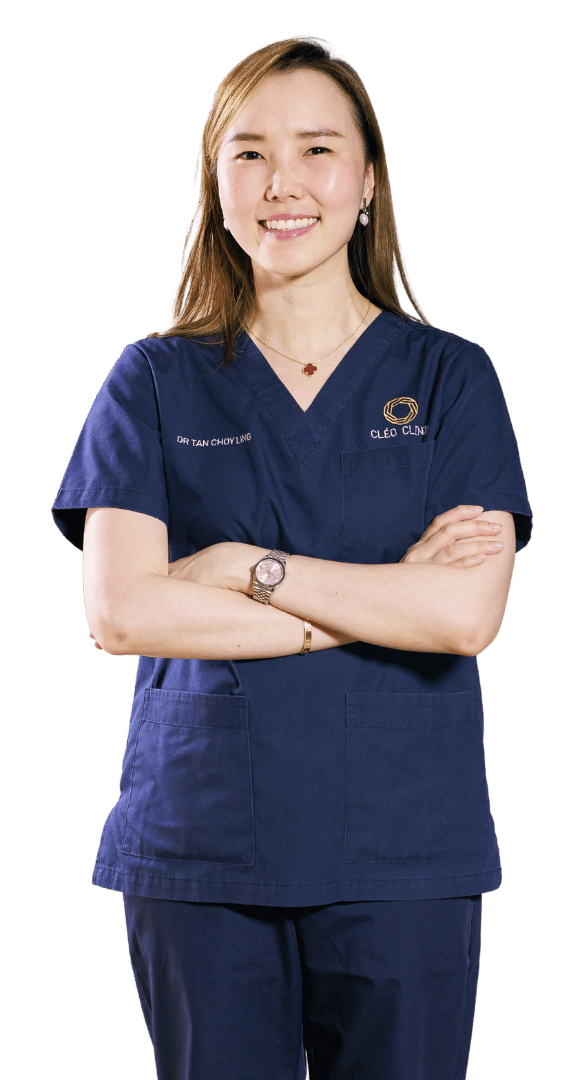
Dr. Tan
Choy Ling
Aesthetic Physician
Dr. Seok
Wye Kitt
Aesthetic Physician

Dr. Amy Lau
Aesthetic Physician

Dr. Sara
Thong
Aesthetic Physician

Dr. Famey
Lee see kit
Aesthetic Physician

Book Your Exosome Therapy at CLEO clinic
Every skin and scalp responds differently, so exosome therapy starts with an in-person assessment. Our doctors will review your concerns and goals, then recommend a plan built for you. Book a consultation at CLEO clinic to find out whether exosome therapy is right for you.
No. Exosome therapy is not live stem cell therapy. Exosomes are cell-free vesicles that carry signalling molecules. Many products are described as coming from stem cells, so ask the clinic what the product contains. For a full comparison, see the stem cell section under What Is Exosome Therapy on this page.
PRP uses platelets from your own blood and has more clinical history, especially for hair loss. Rejuran uses purified DNA-derived polynucleotides and has more aesthetic data than exosomes. Exosomes need no blood draw, but have the least human evidence of the three. There is no reliable head-to-head trial showing that one is clearly better. Read the exosome vs PRP guide.
Numbing cream is usually applied first, and most people feel prickling or pressure. Mild redness, swelling or small bumps can last a few days, and most people return to normal activities quickly. Comfort and recovery vary between people.
It depends on the concern, the area and how your skin or scalp responds. Your doctor will set a plan after assessment and review progress before recommending more sessions.
We have not verified a published price, so this page does not quote a figure. Ask your clinic for an itemised written quote that names the product, the sessions and the aftercare included.
No. Exosome products are not FDA-approved for skin or hair treatment. In Malaysia, check any product’s registration with the NPRA.
It appears well tolerated in the studies so far, but human safety data are limited and mostly short-term. Safety depends heavily on the product and the procedure. Read the Safety, Side Effects and Who Should Avoid Exosome Therapy section on this page before you decide.
Not yet. The evidence is early. Laboratory studies and small human studies suggest possible benefits for skin quality and hair, but large, well-controlled trials are still needed. A 2025 review in trichology describes early clinical reports for hair while noting that high-quality trials are lacking. Treat exosome therapy as an emerging option, not a proven one.
There is no reliable standard yet, because long-term human data are limited. Skin changes can persist for some time after a course, and hair results need ongoing maintenance. Your doctor will review your progress and discuss maintenance at follow-up.
To find out whether exosome treatment is right for your skin or scalp, book a consultation at CLEO clinic or meet our doctors before you book.