
Go Beyond Your Dreams
Quick answer: A nose thread lift uses absorbable PDO or PCL threads placed under the skin to support and contour the nose without surgery. Nose filler uses hyaluronic acid to add volume to the bridge or tip. Both are non-surgical and both need a proper facial assessment first. Neither can make the same change as surgical rhinoplasty, and both carry risks, including rare but serious complications with filler. Your doctor will recommend the option, or combination, that suits your nose shape and goals.
Want a more defined nose without surgery or long downtime? At CLEO clinic, our doctors assess your nose shape and facial profile before recommending a nose thread lift, nose filler or a combination. Book a consultation at any of our four Klang Valley branches.
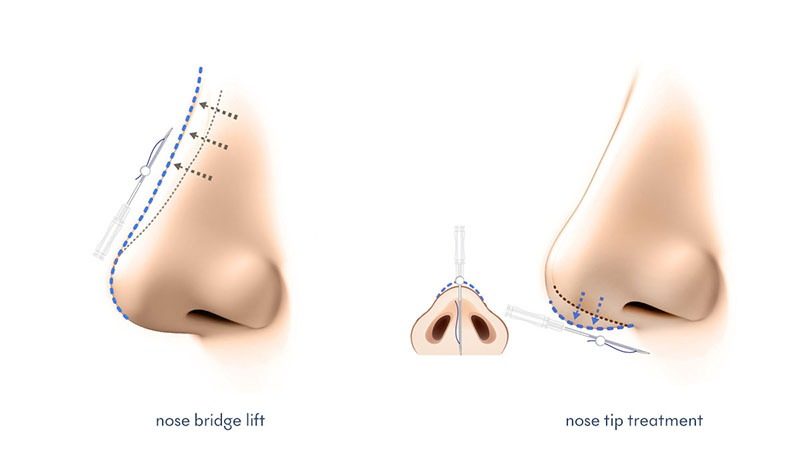
A nose thread lift places fine absorbable threads under the skin. The threads act as a temporary scaffold that supports and gently lifts the tissue, and the body gradually absorbs them while new collagen forms around them. Threads are used to refine the bridge, lift a drooping tip or improve the nasal base. The most common materials are PDO (polydioxanone) and PCL (polycaprolactone). For a detailed comparison, read our guide to PCL vs PDO nose threads.
Nose filler uses hyaluronic acid injected in small amounts to add volume to the bridge, fill a dip or refine the tip. It is temporary and can be dissolved with the enzyme hyaluronidase if needed. Read our full guide to nose filler in Malaysia for the procedure, price range and safety information.
Threads support and lift tissue, while filler adds volume. Threads are often considered for a lift or contour change, and filler for a bridge dip or tip projection. Some people benefit from a combination. For the full comparison, see nose thread lift vs nose filler.
Non-surgical nose treatments can refine shape, improve projection and soften a dip or a drooping tip. They cannot reduce the size of the nose, change bone or cartilage, or correct a deviated septum. Surgical rhinoplasty remains the option for larger structural changes. A consultation will explain what is realistic for your face.
Every nose treatment carries risk, and the nose has a complex blood supply. The most serious risk with filler is vascular occlusion, where filler enters a blood vessel and blocks blood flow. Published reviews describe most nonsurgical rhinoplasty complications as minor, but they also note that serious complications may be under-reported (systematic review of nonsurgical rhinoplasty). A retrospective review of filler corrections describes careful technique and hyaluronidase availability as key to managing risk (retrospective review of hyaluronic acid filler corrections).
Thread lifts carry a different risk profile. Possible complications include swelling, bruising, asymmetry, visible or palpable threads, migration, infection and skin dimpling. These are discussed at consultation, and the outcome depends heavily on placement technique and the individual’s tissue.
These treatments may not be suitable if you:
Tell your doctor about all medicines and recent procedures at your consultation.
Contact your clinic straight away, or seek emergency care if you notice any of the following after treatment:
If you have had filler in the nose, tell any emergency team immediately.
A nose thread lift usually takes around 20 to 30 minutes, after local anaesthesia. Threads are inserted through fine needles or cannulas, and the doctor shapes the tissue by hand to achieve the intended contour. Nose filler is also quick, and numbing cream may be applied first. Mild bruising, swelling and tenderness are common for a few days. Most people return to normal activities quickly, but avoid strenuous exercise, heat and pressing on the nose for a short period, as your doctor advises.
For what happens over the first days and weeks, read our guide to what to expect after a nose thread lift. The result develops gradually as swelling settles.
Duration varies with the material, the amount used, the area treated and how your tissue responds. Threads and filler are both temporary. Clinics quote different figures, so ask your doctor for the expected duration of the specific product, and the source for that figure. For filler duration by area, see our guide to how long fillers last in Malaysia.
Non-surgical reshaping can combine threads, filler and planning to refine several features of the nose at once. Read more about the approach in our article on non-surgical nose reshaping, and see how a balanced result is planned in achieving a balanced appearance with a nose thread lift.
Choose a clinic where a registered doctor assesses your nose and face before any treatment. Ask who will perform the procedure, what products are used and how they are verified, whether hyaluronidase is kept on site, and what the plan is if a complication occurs. Our team can explain their training on our doctors page.
PDO or PCL threads are placed under the skin in a pyramid pattern to support the nasal bridge and tip, for a subtle, natural lift. Results are more understated than surgical rhinoplasty, with shorter recovery, but the procedure still carries risks.

In general, PCL Nose Threads may last longer than hyaluronic acid based Nose Fillers which last 12 to 16 months on average compared to PCL threads which last between 24 to 36 months.
Unlike fillers, the risk of vascular occlusion with nose threads are non-existent, making it a safer option for nose augmentation.
However, for best results, our doctors would need to do a full assessment of your facial profile and discuss with you regarding your desired shape . As we believe every client has different facial profile and requires a customized treatment according to each’s needs .

The regenerative effect is gradual and natural : Polydioxanone, the principal component of PDO threads is a polymer known in the medical field for many years. Once the suture is applied, the Polydioxanone acts on the deeper layers of the skin and helps increase the volume of saggy areas, restoring shapeliness to the face gradually and perfectly naturally.

Before
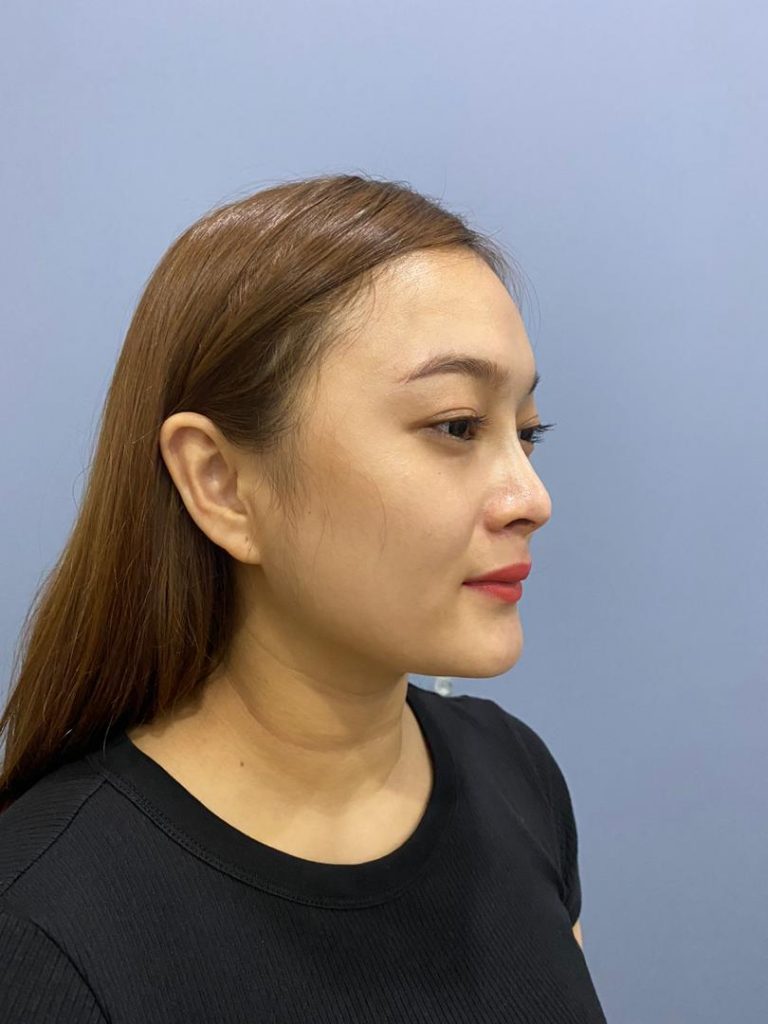
After
F.A.Q
For nose thread lift, threads are inserted horizontally into the nose bridge and vertically into the nose tip. The threads act as a scaffolding structure which helps to contour and shape the nose to the desired state. The nose also can be reshaped by using hyaluronic acid too.
The procedure takes around 20-30 minutes. After a small local anaesthetic, we insert the suture under the skin to a depth of about three to five millimetres. No incision is required, as the suture is inserted using a fine needle.
Once the suture has been applied, slight compression of the tissue is placed to reshape it by hand and to obtain the desired lifting effect.
Threads may be used as a single treatment or in combination with fillers..
our work inspires smiles
Doctors Behind Our Success
For more infomation please contact us at 014-6561883 or schedule a free consultation by clicking on the button below.

Why Choose us?

Certified Doctors

Safe and Proven Methods

Minimal downtime

FDA Approved
Trusted by hundreds
satisfied clients 5⭐️ reviews on google