Table of Contents
- What Is Fungal Acne?
- Fungal Acne vs Regular Acne
- Fungal Acne Symptoms
- What Causes Fungal Acne?
- How Is Fungal Acne Diagnosed?
- Fungal Acne Treatment in Malaysia
- Fungal Acne Shampoo and Skincare
- Fungal Acne Prevention
- When to See a Doctor
- Fungal Acne FAQs
- Is fungal acne contagious?
- Can fungal acne be cured?
- Is fungal acne the same as regular acne?
- Can diet cause fungal acne?
- How long does fungal acne take to clear?
- Can I use acne cream for fungal acne?
- Does shampoo help fungal acne?
Quick answer: Fungal acne, also called Malassezia folliculitis, is a yeast infection of the hair follicles. It causes clusters of small, uniform, itchy bumps, often on the forehead, chest, back and shoulders. It is not caused by bacteria or clogged pores, so acne treatments often fail. A doctor can confirm it with an examination, and antifungal treatment is the standard approach. It can be controlled, but it often returns, so prevention matters.
If your bumps look like acne but do not respond to acne care, fungal acne is worth ruling in or out. This guide explains the signs, causes, how doctors diagnose it, which treatments work in Malaysia, and how to prevent flare-ups.
What Is Fungal Acne?
Fungal acne is folliculitis, which means the hair follicles are inflamed. The cause is yeast from the Malassezia group, which lives naturally on healthy skin. In warm, humid and oily conditions, the yeast multiplies and triggers inflammation. The result looks like acne, but it behaves differently and needs a different treatment. Clinical reviews describe it as a fungal acneiform condition that is often misdiagnosed as acne vulgaris (Rubenstein: Malassezia (Pityrosporum) folliculitis review).
Fungal Acne vs Regular Acne
The two can look alike, so these differences help:
- Appearance: fungal acne bumps are small, uniform and similar in size. Regular acne is more varied, with blackheads, whiteheads and larger spots.
- Itch: fungal acne is often itchy. Regular acne usually is not.
- Location: fungal acne favours the forehead, chest, back and shoulders.
- Cause: regular acne involves oil, dead skin, bacteria and hormones. Fungal acne is driven by yeast.
- Treatment response: regular acne often responds to benzoyl peroxide or retinoids. Fungal acne usually needs antifungal treatment, and some acne products can make it worse.
For a broader guide to acne types, read our guide to identifying different types of acne.
Fungal Acne Symptoms
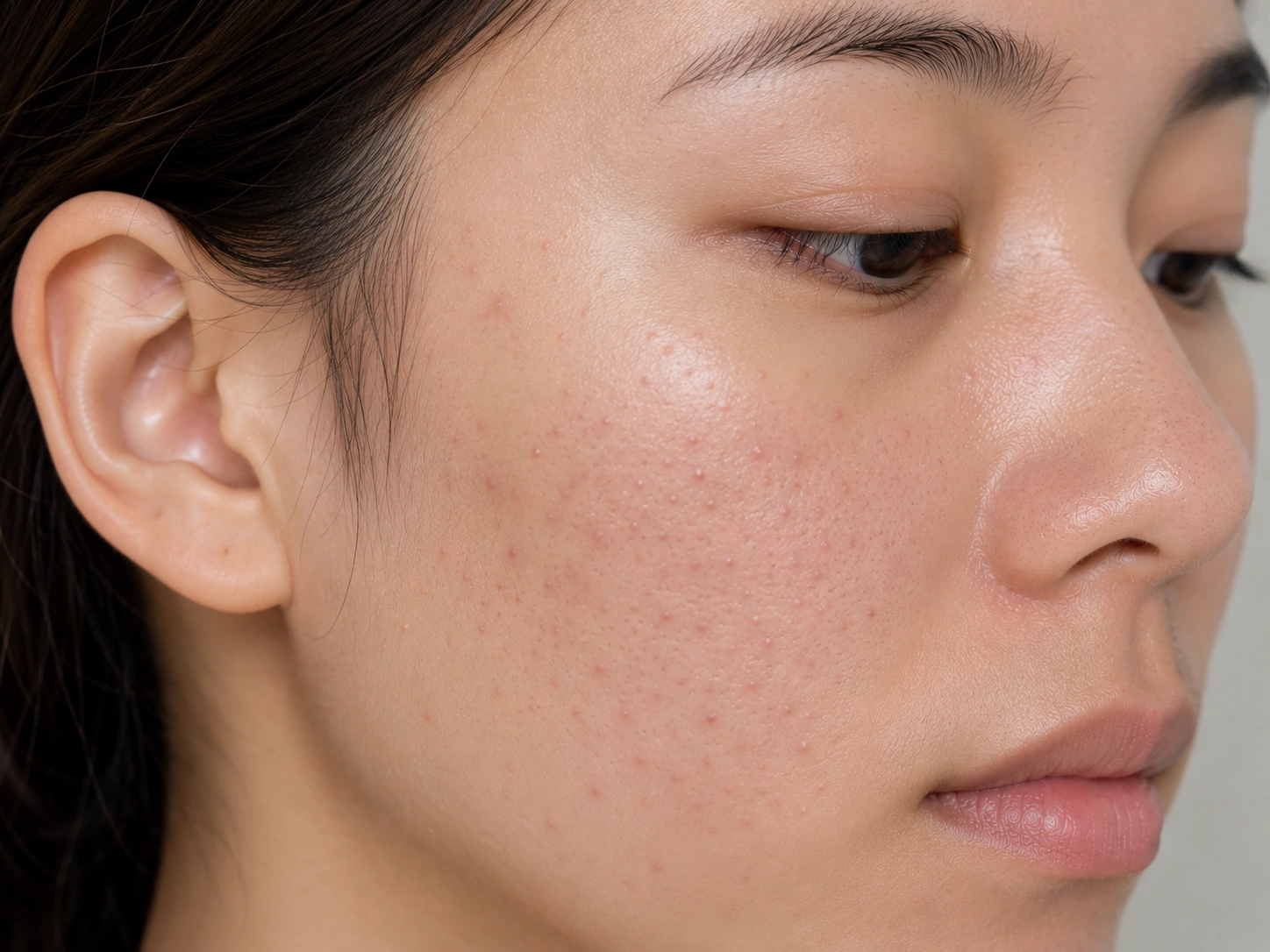
- Small, uniform, itchy red bumps or pustules
- Clusters on the forehead, chest, back and shoulders
- Bumps that look similar in size and shape
- Itching that gets worse with heat and sweat
- Few or no blackheads or whiteheads
Cleveland Clinic describes fungal acne as clusters of small, itchy, red bumps caused by yeast in the hair follicles (Cleveland Clinic: fungal acne).
What Causes Fungal Acne?
- Heat, humidity and sweat: Malaysia’s climate makes sweat and trapped moisture common, and yeast grows well in these conditions.
- Tight or occlusive clothing: headbands, helmets, sports gear and masks can trap heat and sweat.
- Heavy products: thick creams, some sunscreens and hair products can feed yeast growth.
- Antibiotics: repeated antibiotic courses for acne can disturb the skin’s normal microbes.
- Weakened immunity or steroid use: these can make yeast overgrowth more likely.
- Diet: some people notice flares after sugary or high-glycaemic foods, but the evidence is limited.
How Is Fungal Acne Diagnosed?
There is no single home test. A doctor usually diagnoses fungal acne by looking at the pattern of bumps, their uniform size, the distribution and the itch, and by reviewing how the rash has responded to acne treatment. In some cases, a sample may be examined under a microscope to look for yeast. Because the appearance overlaps with acne, a proper assessment is the most reliable route. Read our guide to skin conditions and when to see a doctor.
Fungal Acne Treatment in Malaysia
Antifungal treatment is the standard approach. Options include:
- Antifungal shampoo or wash: products containing ketoconazole, selenium sulfide or zinc pyrithione are often used on the affected skin. Read our ketoconazole shampoo guide.
- Topical antifungal creams: a doctor may prescribe a cream for small, localised areas.
- Oral antifungal tablets: for widespread or stubborn cases, a doctor may prescribe fluconazole or itraconazole. These need assessment and monitoring, including liver function where relevant.
Antibiotics do not treat fungal acne, and isotretinoin is not used for it. If you take any acne medicine, tell your doctor so they can review it. For the wider acne picture, see our acne treatment page.
Fungal Acne Shampoo and Skincare
Antifungal shampoo is often used on the chest, back and scalp, and it should be left on the skin for the time the label advises. Choose light, non-comedogenic moisturisers and sunscreens. Our pore-clogging checker can help you test products, and our step-by-step skincare routine shows a simple routine that suits treated skin.
Fungal Acne Prevention
- Shower after sweating, and dry your skin fully, especially the chest, back and skin folds.
- Change sweaty clothes, gym wear and pillowcases often.
- Choose breathable, loose clothing and avoid tight headbands and helmets for long periods.
- Avoid heavy, occlusive creams on the affected areas.
- Use maintenance antifungal treatment if your doctor advises it, because relapse is common.
- Do not scrub or pick at the bumps.
For back-specific advice, read our back acne guide, which covers similar triggers.
When to See a Doctor
See a doctor if:
- Your bumps do not improve after several weeks of acne treatment
- The bumps spread, become widespread or become painful
- You notice signs of infection, such as pus, fever or spreading redness
- You are not sure whether the rash is fungal acne or something else
The best time to see a dermatologist is when a rash keeps returning or does not match acne. Read the best time to see a dermatologist for acne.
Fungal Acne FAQs
Is fungal acne contagious?
Fungal acne is generally not contagious from person to person, because the yeast already lives on most people’s skin. It can become more common in people who share towels, clothing or razors while sweating in the same conditions, so avoid sharing personal items.
Can fungal acne be cured?
It can be controlled and often cleared, but it tends to return, especially in hot and humid weather. Good sweat control, sensible skincare and any maintenance treatment your doctor recommends help prevent relapse.
Is fungal acne the same as regular acne?
No. Fungal acne is a yeast infection of the follicles. Regular acne involves oil, dead skin, bacteria and hormones. The two can look alike, so a proper diagnosis matters.
Can diet cause fungal acne?
Diet is not a proven direct cause. Some people notice flares after sugary or high-glycaemic foods, but the evidence is limited. Diet changes alone will not treat fungal acne. For more, read our food and acne myths guide.
How long does fungal acne take to clear?
Many people see improvement within a few weeks of antifungal treatment, but clearing can take several weeks to months. Your doctor will set a timeline based on how widespread the rash is and how you respond.
Can I use acne cream for fungal acne?
Usually not. Benzoyl peroxide and retinoids are designed for bacterial acne, and some can irritate or worsen a yeast rash. Ask a doctor before using acne products on bumps you think may be fungal.
Does shampoo help fungal acne?
Antifungal shampoo is often used as part of treatment, especially on the chest and back. It works best alongside a doctor’s plan, rather than as a standalone fix.
Disclaimer: This information is for education only and is not medical advice. Fungal acne must be diagnosed and treated by a qualified doctor, and results vary. Please speak to a healthcare professional before starting any treatment.