
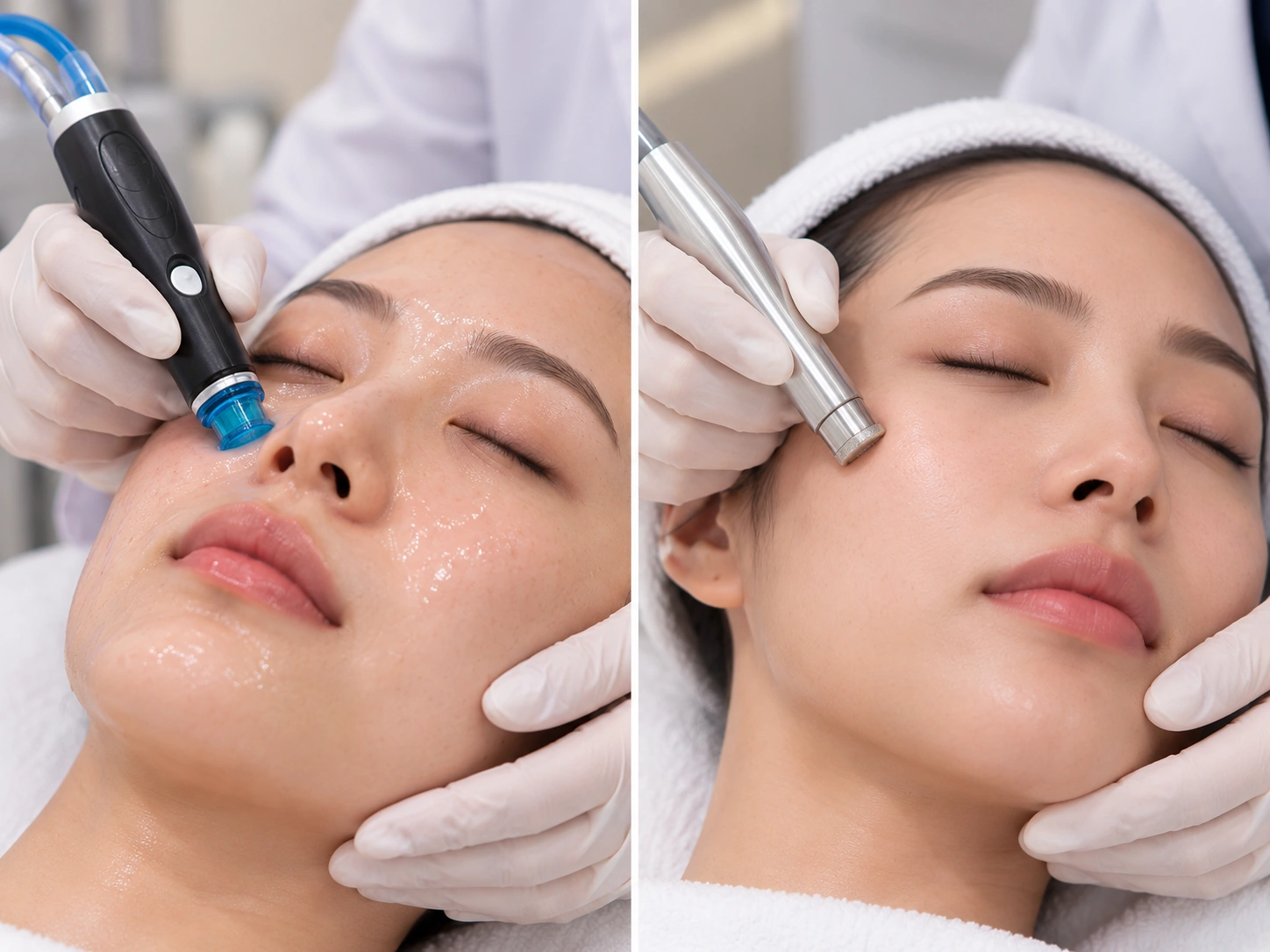

Quick Answer: HydraFacial is the gentler option, combining exfoliation with deep hydration and antioxidant infusion in one step, suitable for nearly all skin types including sensitive skin, with no downtime. Microdermabrasion is a more intensive mechanical exfoliation, generally better suited to normal or oily skin dealing with texture, superficial pigmentation, or clogged pores, but not recommended for sensitive or rosacea-prone skin.
Both treatments aim to reveal fresher, smoother skin by removing the outer layer of dead skin cells, but they work through genuinely different mechanisms, and that difference matters more than most people realize when deciding which one actually fits their skin.
What Is HydraFacial?
HydraFacial is a multi-step treatment that cleanses, exfoliates, extracts, and hydrates your skin in a single session using a patented device with vortex-suction technology. Unlike purely mechanical exfoliation, it simultaneously infuses hydrating serums and antioxidants into your skin as it exfoliates, so you leave with plumper, more hydrated skin rather than just a cleaner surface. It’s gentle enough to suit nearly all skin types, including sensitive and reactive skin, with no meaningful downtime.
What Is Microdermabrasion?
Microdermabrasion is a mechanical exfoliation treatment that uses fine crystals or a diamond-tipped wand to physically remove the outermost layer of dead skin cells, paired with suction to clear away the debris. It’s a more intensive, purely exfoliation-focused approach than HydraFacial, without the simultaneous hydration or serum infusion step, making it more targeted toward texture and surface concerns specifically.
Key Differences Between HydraFacial and Microdermabrasion
| HydraFacial | Microdermabrasion | |
|---|---|---|
| Mechanism | Vortex suction exfoliation + simultaneous hydration and antioxidant infusion | Mechanical exfoliation (crystals or diamond tip) + suction only |
| Intensity | Gentle | More aggressive |
| Best skin types | Nearly all skin types, including sensitive and rosacea-prone skin | Normal to oily skin; not recommended for highly sensitive or rosacea-prone skin |
| Downtime | None to minimal | Possible temporary redness |
| Results feel | Instant glow, plumpness, and hydration | Gradual improvement in texture and tone over a course of sessions |
| Best for | Dehydration, dullness, mild congestion, overall skin quality | Rough texture, superficial pigmentation, clogged pores |
Which Is Better for Your Skin Type?
If you have sensitive skin or a condition like rosacea, HydraFacial is generally the safer choice, its gentler mechanism and simultaneous hydration step make it far less likely to trigger irritation or flare-ups than the more mechanically abrasive microdermabrasion. Microdermabrasion tends to be better tolerated by normal to oily skin without a history of reactivity, where its more intensive exfoliation can be used without the same irritation risk.
If you’re unsure which category your skin actually falls into, our guide on identifying your skin type is worth working through before booking either treatment.
Which Is Better for Specific Concerns?
- Dehydrated, dull, or generally tired-looking skin → HydraFacial, since its hydration and antioxidant infusion directly addresses moisture level, not just surface texture
- Rough texture or superficial pigmentation → Microdermabrasion tends to show more targeted improvement here, since it more aggressively resurfaces the outer skin layer. If pigmentation specifically is your main concern, it’s worth comparing this against more targeted options like chemical peels or laser as well
- Clogged pores and congestion → Microdermabrasion helps clear surface-level congestion, though HydraFacial’s vortex extraction is often considered more thorough for actual pore-clogging debris. If you’re not sure whether your current skincare is contributing to congestion, our pore-clogging checker can help identify that
- Fine lines and overall skin quality → HydraFacial’s combined hydration and antioxidant approach tends to support this more directly than exfoliation alone
Downtime and Recovery Compared
HydraFacial involves essentially no downtime, mild redness may appear immediately after treatment but typically resolves within a few hours, letting you return to normal activities right away. Microdermabrasion can cause temporary redness and mild sensitivity that lasts slightly longer, particularly with more intensive settings, though it’s still considered a low-downtime treatment overall compared to more aggressive resurfacing options like chemical peels.
Cost Comparison
Microdermabrasion is generally the more budget-friendly option of the two, reflecting its simpler, single-mechanism technology. HydraFacial typically costs more per session, given its more advanced device and the added serums and boosters infused during treatment. Exact pricing varies by clinic and protocol, so it’s worth getting a direct quote for both during a consultation if cost is a deciding factor alongside which treatment actually suits your skin.
Can You Combine HydraFacial and Microdermabrasion?
These treatments aren’t typically combined in the same session, since both are forms of exfoliation and layering them could over-strip your skin. Instead, most people choose one as their regular skin maintenance treatment based on their skin type and main concern, and some alternate between the two seasonally or as skin needs change (for example, leaning on microdermabrasion during a period focused on texture, then switching to HydraFacial when hydration becomes the priority).
FAQ
Which is better, HydraFacial or microdermabrasion? Neither is universally “better,” HydraFacial suits more skin types (including sensitive skin) and adds hydration alongside exfoliation, while microdermabrasion offers more intensive resurfacing for texture and pigmentation on normal to oily skin. The right choice depends on your skin type and main concern.
Can I get microdermabrasion if I have sensitive skin? It’s generally not recommended for highly sensitive or rosacea-prone skin, given its more mechanically intensive exfoliation. HydraFacial is typically the safer, gentler alternative for these skin types.
How often should I get HydraFacial or microdermabrasion? Many providers recommend monthly HydraFacial sessions to maintain hydration and cumulative benefits. Microdermabrasion is often done slightly less frequently, though this varies by skin condition and provider recommendation.
Does HydraFacial replace the need for microdermabrasion, or vice versa? Not necessarily, they serve overlapping but distinct purposes. Someone prioritizing hydration and overall skin quality may prefer HydraFacial exclusively, while someone focused specifically on texture or pigmentation may find microdermabrasion more targeted, without needing both.
Which treatment gives faster visible results? HydraFacial typically delivers a more immediately visible glow and plumpness right after a single session, while microdermabrasion’s texture and tone improvements tend to build more gradually across a course of treatments.
Bottom Line
HydraFacial and microdermabrasion both exfoliate the skin, but they aren’t interchangeable, HydraFacial is the gentler, more universally suitable option that adds hydration alongside exfoliation, while microdermabrasion offers more intensive resurfacing better suited to normal or oily skin dealing with texture and pigmentation specifically. Your skin type and primary concern, more than which treatment sounds more advanced, should drive the decision.
At CLEO Clinic, skin assessments are carried out under the supervision of LCP-Certified doctors to determine which of these treatments, or another option entirely, genuinely fits your skin. See our full range of treatable conditions, or book a consultation to find out which is right for you.


