
Table of Contents
- Why Combine PRP With a Medicine?
- What the Research Shows for PRP With Minoxidil
- What the Research Shows for PRP With Finasteride
- When a Combined Plan Makes Sense
- Safety and Side Effects to Discuss
- Minoxidil
- Finasteride
- PRP
- How a Combined Plan Is Usually Structured
- What to Ask Your Doctor Before Starting
- Frequently Asked Questions
- Can I use PRP and minoxidil together?
- Is PRP with finasteride better than PRP alone?
- Can women use finasteride with PRP?
Quick answer: Combining PRP with a medicine such as topical minoxidil or oral finasteride is a common approach in clinics, and some studies suggest the combination can improve results compared with either option alone. Research is still limited, and the best combination depends on the cause and pattern of your hair loss. A doctor should assess your scalp and medical history before recommending a combined plan, because finasteride is not suitable for everyone, and both medicines have side effects that need monitoring.
Many people who look into PRP for hair loss ask whether they should use it on its own or alongside a medicine. The answer is not simple. This guide explains how combined plans are used, what the research shows about PRP with minoxidil and with finasteride, the safety points to discuss, and what to ask your doctor. For the basics of PRP itself, see our guide to PRP for hair loss.
Why Combine PRP With a Medicine?
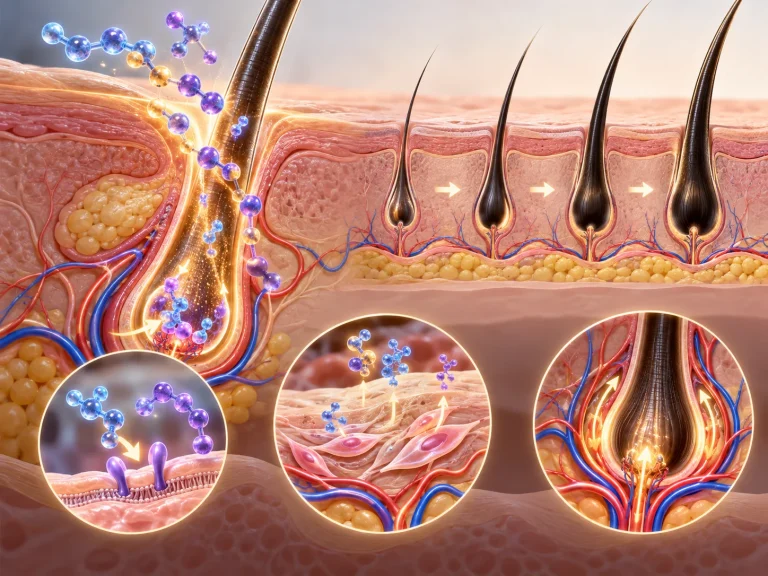
PRP and medicines work in different ways. PRP is an injected treatment that aims to support existing follicles with growth factors. Minoxidil is a topical or oral medicine that prolongs the growth phase of the hair cycle. Finasteride is an oral medicine that reduces the conversion of testosterone to DHT, a hormone linked to pattern hair loss. Because they act through different mechanisms, clinicians may combine them to address more than one part of the problem.
Clinical guidance for androgenetic alopecia recognises finasteride and topical minoxidil as the two treatments with the strongest regulatory approval. Cleveland Clinic notes that PRP is often used in combination with these medicines for best results, although individual outcomes vary (Cleveland Clinic: PRP therapy).
What the Research Shows for PRP With Minoxidil
PRP combined with minoxidil has been studied in several trials. In one split-scalp study, participants received PRP on one side and a placebo on the other, while both sides used topical minoxidil. Results were measured over six months. The authors reported that the combination improved hair count and density compared with the control side (Healio: PRP and minoxidil combination study).
A network meta-analysis of minoxidil combinations also found that PRP combined with minoxidil ranked among the more effective options, although the analysis includes studies of varying size and quality (PMC: relative efficacy of minoxidil in combination therapies).
What the Research Shows for PRP With Finasteride
PRP with oral finasteride has also been studied, with some trials showing improvement compared with the control side. In the same split-scalp study, the combination of PRP and minoxidil showed greater improvement than PRP with finasteride at six months, so the two combinations may not perform the same way (Healio: PRP and minoxidil combination study). Finasteride also appeared among the most effective combinations for men in the network meta-analysis.
When a Combined Plan Makes Sense
A combined plan is more likely to be considered if:
- Your hair loss is progressing despite using one medicine alone
- You have a clear pattern of androgenetic hair loss confirmed by a doctor
- You are not pregnant, planning pregnancy or breastfeeding
- You understand the side effects of each medicine and are willing to be monitored
A combined plan may be less suitable if your hair loss has another cause, such as alopecia areata, telogen effluvium or a scalp condition. A diagnosis should come before any combination is started.
Safety and Side Effects to Discuss
Minoxidil
Topical minoxidil can cause scalp irritation, itching or dryness, and it may cause unwanted hair growth on the face or hands if it spreads. Oral minoxidil has its own effects, including changes in heart rate, fluid retention and dizziness, and it is not suitable for everyone. Your doctor will check your blood pressure and heart health before recommending oral minoxidil.
Finasteride
Finasteride is prescription-only and is not suitable for women who are or may become pregnant, because it can harm a male foetus. Side effects can include reduced sex drive, erectile problems and mood changes in a minority of users. Discuss these with your doctor before starting, and report any changes promptly. For more detail, read our guide to finasteride side effects and usage.
PRP
PRP is made from your own blood, so allergic reactions are rare. Common effects include scalp tenderness, mild swelling and headache after treatment. Tell your doctor about blood thinners, active scalp infections and any clotting disorders before PRP.
How a Combined Plan Is Usually Structured
Clinics usually build a combined plan around three things: a diagnosis, a treatment schedule and a review date. The PRP course is often planned as a series of sessions, with the medicine started at the same time or after a short interval. Your doctor should explain which medicine is recommended, why, the expected timeline and how progress will be measured, such as photos or scalp assessments. Maintenance is usually needed to keep results, and stopping medicines can lead to shedding returning.
What to Ask Your Doctor Before Starting
- What is the diagnosis, and does PRP suit this type of hair loss?
- Which medicine would you recommend with PRP, and why?
- What are the side effects of each medicine, and how will you monitor them?
- How many PRP sessions are planned, and how long before I should see progress?
- What happens if I stop the medicine or the PRP course?
- What does the full plan cost, including medicines and maintenance?
For cost planning, see our PRP hair loss cost guide. To compare PRP with each medicine on its own, read our PRP vs minoxidil vs finasteride vs dutasteride comparison. You can also read about minoxidil results and timelines.
Frequently Asked Questions
Can I use PRP and minoxidil together?
Some clinics combine them, and some studies suggest the combination may improve results. Whether it is right for you depends on your diagnosis and medical history, so ask a doctor.
Is PRP with finasteride better than PRP alone?
Some studies suggest the combination may help, but the evidence is limited. The right choice depends on your hair loss pattern, your sex and your health, and it should be decided with a doctor.
Can women use finasteride with PRP?
Finasteride is generally not recommended for women who are pregnant or may become pregnant. Women may be offered other options, and a doctor will assess suitability.
To discuss whether a combined plan suits you, contact CLEO clinic or read about our doctors.
Disclaimer: The information on this website is for educational and informational purposes only and does not constitute medical advice or establish a doctor-patient relationship. Individual results may vary. Prescription medicines such as finasteride and oral minoxidil require medical assessment. All treatments carry risks. Please consult a qualified healthcare professional for a medical assessment before undergoing any treatment.