
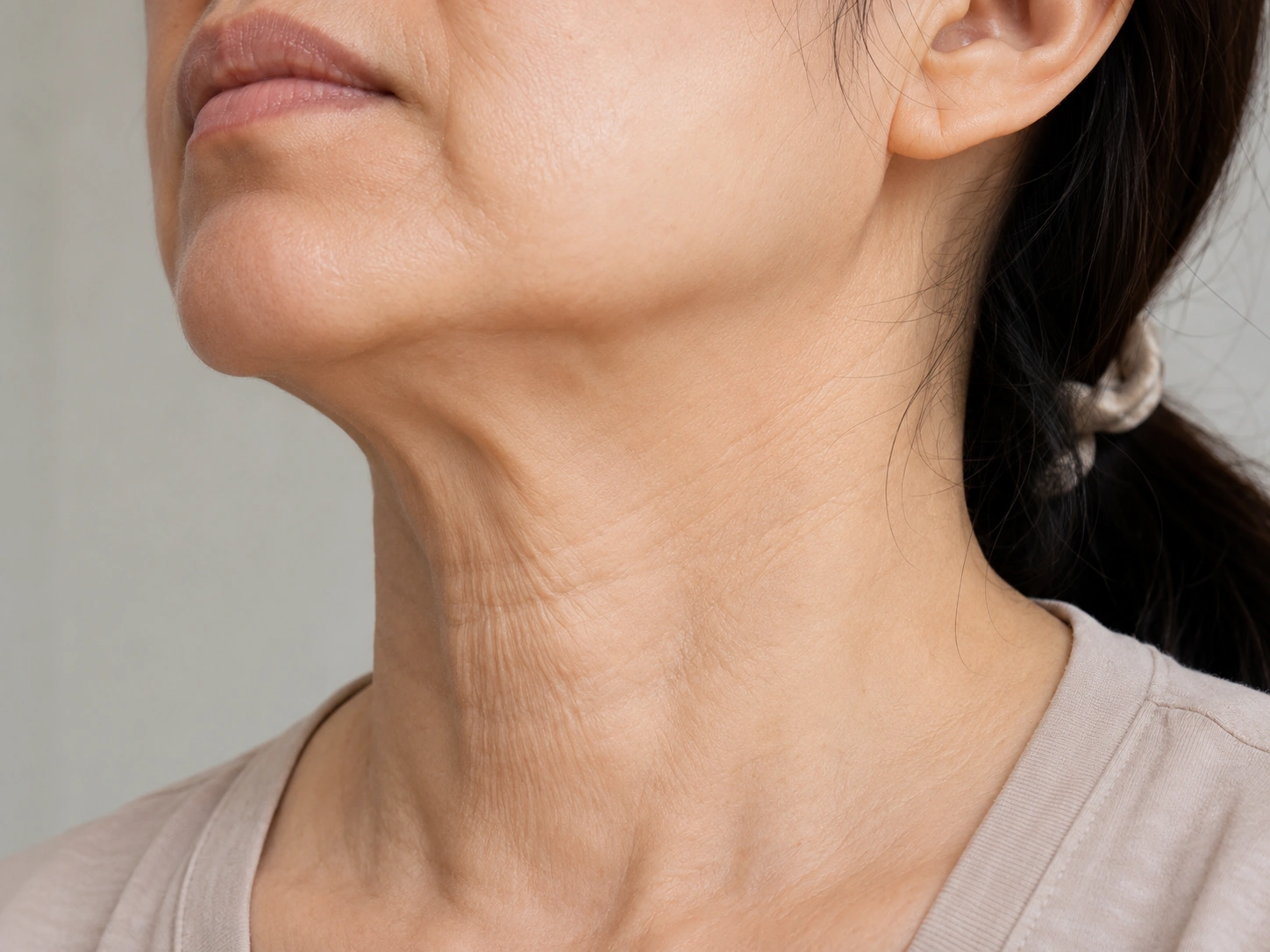

Turkey neck refers to the loose, sagging skin on the neck that develops with age, named for its resemblance to the wattle of a turkey. It results from a combination of collagen and elastin loss, weakening neck muscles (particularly the platysma), sun damage, and gravity acting on skin over time. Treatment options range from neck exercises and topical skincare (limited evidence for meaningfully tightening skin) to non-surgical treatments like Botox, Kybella, radiofrequency, and ultrasound skin tightening, up to surgical neck lift, which is generally considered to produce the most dramatic and lasting results for significant sagging.
What Is Turkey Neck?
Turkey neck describes the progressive loss of firmness, elasticity, and structural support in the skin and muscle of the neck, resulting in a loose, wrinkled, or drooping appearance under the chin and along the jawline. It’s not a medical condition but a common cosmetic concern associated with aging.
What Causes Turkey Neck?
Loss of Collagen and Elastin
As skin ages, its production of collagen and elastin — the proteins responsible for skin’s firmness and stretch-back ability — naturally declines. This is one of the primary drivers behind the progressive loss of neck skin firmness over time.
Weakening Neck Muscles
The platysma, a thin muscle sheet running down the neck, can weaken and separate with age, contributing to the banding and sagging appearance often seen alongside skin laxity.
Sun Damage
Cumulative UV exposure accelerates the breakdown of collagen and elastin in the skin, and the neck — often under-protected compared to the face — is particularly vulnerable to this kind of cumulative damage.
Gravity and Natural Aging
Over time, gravity gradually pulls on skin that has lost its underlying structural support, contributing to the sagging appearance associated with turkey neck.
Other Contributing Factors
- Significant weight fluctuations, which can stretch skin beyond its ability to snap back
- Genetics, which influence how quickly skin loses elasticity
- Smoking, which is associated with accelerated collagen breakdown
How to Get Rid of Turkey Neck
Neck Exercises
Neck-toning exercises are commonly recommended and can help strengthen the underlying platysma muscle. However, the evidence for their effectiveness is limited — exercise routines can tone muscle, but there’s little scientific proof they meaningfully tighten loose skin or resolve deeper skin laxity on their own.
Topical Skincare and At-Home Devices
- Retinoid and collagen-supporting skincare — may offer modest improvement in skin texture and firmness over time, though results are gradual and limited for significant sagging
- Daily sunscreen — helps prevent further collagen breakdown from ongoing UV exposure
- LED light therapy — positioned by some brands as a non-invasive option to support skin tightening, though it’s generally considered a milder, gradual approach rather than a dramatic fix
Non-Surgical Cosmetic Treatments
| Treatment | How It Helps |
|---|---|
| Botox | Can help relax platysma bands, softening their visible appearance |
| Kybella (deoxycholic acid injections) | Targets and reduces submental fat contributing to fullness under the chin |
| Radiofrequency skin tightening | Uses heat energy to stimulate collagen production in the skin’s deeper layers |
| Ultrasound skin tightening | Targets deeper tissue layers to encourage gradual firming over several months |
| Dermal fillers | Can address volume loss contributing to the overall neck contour in some cases |
These options are generally considered less invasive than surgery, with less downtime, but typically produce more modest, gradual results and often need to be repeated periodically to maintain effects.
Surgical Options
For significant sagging, a neck lift (cervicoplasty or platysmaplasty) is generally regarded as delivering the most dramatic and longest-lasting results, since it directly removes excess skin and can tighten the underlying platysma muscle. It’s a more invasive option with a longer recovery period than non-surgical treatments, and is typically considered when skin laxity is more advanced.
Which Treatment Is Right for You?
Choice of treatment usually depends on the degree of sagging:
- Mild laxity or early signs of aging — topical skincare, consistent sun protection, and neck exercises may offer modest support
- Moderate laxity, muscle banding, or submental fullness — non-surgical options like Botox, Kybella, radiofrequency, or ultrasound tightening are often considered
- Significant, advanced sagging — a surgical neck lift is generally considered to provide the most substantial and lasting improvement
A consultation with a board-certified dermatologist or plastic surgeon can help determine which approach best matches your specific degree of skin laxity and goals.
Can You Prevent Turkey Neck?
While turkey neck can’t be entirely prevented since it’s tied to natural aging, several habits may help slow its progression:
- Apply sunscreen to your neck daily, not just your face, since this area is often overlooked and highly exposed to UV damage
- Maintain a stable, healthy weight, since significant weight fluctuations can stretch skin’s ability to spring back
- Avoid smoking, which is linked to accelerated collagen breakdown
- Consider preventive skincare with collagen-supporting ingredients earlier, rather than waiting until sagging is more advanced
- Practice good posture, since some practitioners suggest posture habits (like frequently looking down at phones) may contribute to accelerated neck skin changes over time
Frequently Asked Questions
What causes turkey neck? Turkey neck is caused by a combination of collagen and elastin loss, weakening of the platysma neck muscle, cumulative sun damage, and gravity acting on skin that has lost its structural support over time.
Do turkey neck exercises actually work? The evidence is limited. Neck exercises can help tone the underlying platysma muscle, but there’s little scientific proof that they meaningfully tighten loose skin or resolve significant sagging on their own.
What is the best treatment for turkey neck? The best treatment depends on the severity of sagging. Mild cases may respond to skincare and sun protection, moderate cases to non-surgical treatments like Botox, Kybella, or radiofrequency, and significant sagging typically responds best to a surgical neck lift.
Is a neck lift the only permanent solution for turkey neck? Surgical neck lift is generally considered to provide the most dramatic and longest-lasting results for significant sagging, since it directly removes excess skin, though non-surgical treatments can still offer meaningful, if more gradual and temporary, improvement for milder cases.
Can Botox help with turkey neck? Yes, to an extent — Botox can help relax visible platysma muscle bands in the neck, softening their appearance, though it doesn’t address loose skin itself the way a neck lift or skin-tightening treatment would.
Bottom Line
Turkey neck refers to loose, sagging skin under the chin and around the neck, often caused by natural aging, loss of skin elasticity, sun damage or genetics. At CLEO Clinic, assessments are carried out under the supervision of LCP-Certified doctors to determine the most suitable approach for skin tightening and contouring.
Each patient undergoes a thorough evaluation before a personalized treatment plan is advised, based on skin condition and severity of sagging, to achieve a firmer, more defined neck contour.


