Table of Contents
- What Is Cystic Acne?
- Cystic Acne Symptoms and How It Differs From Regular Acne
- What Causes Cystic Acne?
- Common Myths
- Cystic Acne Stages: Why It Hurts and How It Heals
- Cystic Acne Treatment Options in Malaysia
- Topical Treatments
- Oral Medications
- In-Clinic Procedures
- Cystic Acne Scars
- Cystic Acne vs Nodular Acne vs Hormonal Acne
- Home Care and What to Avoid
- When to See a Doctor
- Cystic Acne FAQs
- Is cystic acne the same as nodular acne?
- Will cystic acne go away on its own?
- Does washing my face more help cystic acne?
- Can cystic acne be cured?
- Is cystic acne the same as hormonal acne?
Quick answer: Cystic acne is the most severe form of acne. It forms deep, painful, pus-filled lumps under the skin that can last for weeks or years and often leave scars. It is driven mainly by hormones, genetics and blocked, inflamed follicles, not by poor hygiene. Over-the-counter products rarely clear it, so treatment usually needs a doctor. Early treatment lowers the risk of permanent scarring.
If you have deep, painful bumps that do not respond to regular acne products, you are probably dealing with cystic acne. This guide explains the symptoms, causes, healing stages, treatment options in Malaysia and how to avoid scarring.
What Is Cystic Acne?
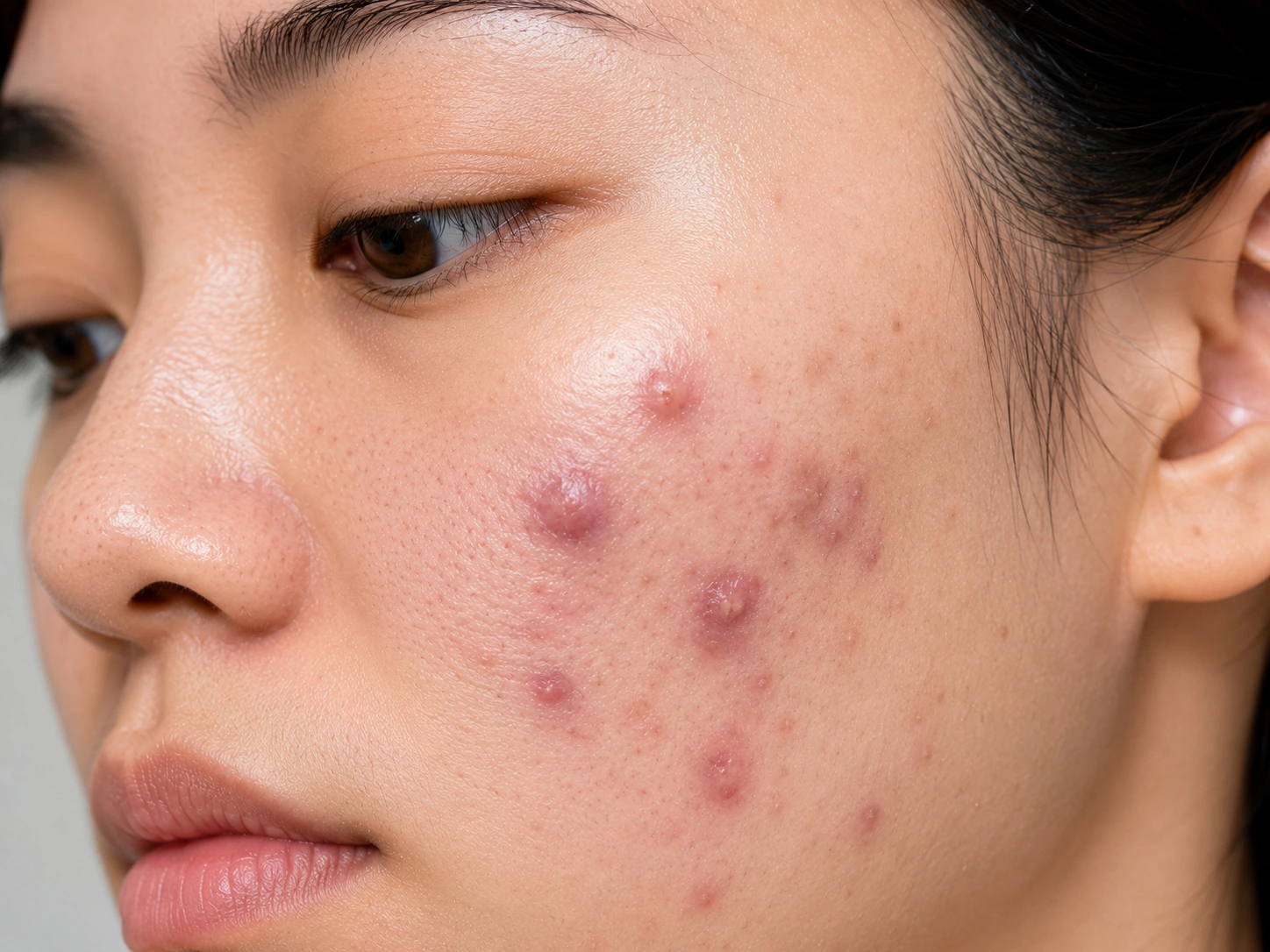
Cystic acne happens when a clogged pore becomes infected deep in the skin. Oil, dead skin and bacteria become trapped, and the infection pushes into the deeper layers, forming a large, tender lump full of pus. Cleveland Clinic describes cystic acne as deeper and wider than regular acne, and it often merges with neighbouring lesions (Cleveland Clinic: nodular and cystic acne).
It commonly affects the face, chest, back, upper arms and shoulders. Because a cyst can rupture under the skin and spread infection to nearby follicles, breakouts often cluster rather than appear as single spots.
Cystic Acne Symptoms and How It Differs From Regular Acne
- Large, painful, tender lumps under the skin
- Redness and warmth around the lump
- Pus that may sit close to the surface or deep beneath it
- Lumps that persist for weeks, or that return in the same area
- Scarring or dark marks after the lump settles
A regular pimple is usually one small, surface-level spot that clears in days. Cystic acne is deeper, more painful and slower to resolve. If your bumps look like this, see a doctor rather than waiting for them to clear.
What Causes Cystic Acne?
- Hormones (androgens): hormone surges, especially during puberty, drive oil production and clogged pores.
- Hormonal life stages: the menstrual cycle, pregnancy and menopause can trigger or worsen cystic breakouts.
- PCOS: polycystic ovary syndrome is linked to more persistent acne in some women. Read our PCOS guide.
- Genetics: a family history of severe acne raises your own risk.
- Some medicines: certain drugs can trigger or worsen acne.
- Friction, heat and sweat: tight clothing and humid conditions can contribute to blocked pores.
Common Myths
Cystic acne is not caused by poor hygiene, chocolate or greasy food. Over-washing or scrubbing can actually worsen irritation. Some research suggests a lower-sugar diet may help some people, but no specific food has been shown to cause it.
Cystic Acne Stages: Why It Hurts and How It Heals
Cystic acne usually moves through five stages: the initial breakout, inflammation with pus formation, drainage or absorption, skin repair and, finally, fading of any dark marks. Cystic lesions hurt more than regular pimples because several inflamed follicles merge deep in tissue that has more nerve endings.
Popping or squeezing at any stage pushes infection deeper and can prolong healing or worsen scarring. Healing time varies, and some lumps take weeks to settle.
Cystic Acne Treatment Options in Malaysia
Treatment depends on severity, the number of lesions and whether scarring has started. A dermatologist or aesthetic doctor will usually combine options.
Topical Treatments
- Benzoyl peroxide: reduces surface bacteria and inflammation.
- Retinoids: adapalene is available over the counter, while tretinoin is prescription. They unclog pores and help other treatments work. Read our tretinoin guide.
Oral Medications
- Oral antibiotics: control bacteria and inflammation for more widespread cases.
- Hormonal therapy: such as combined oral contraceptives, for women whose breakouts follow hormonal patterns.
- Spironolactone: reduces oil production, used with care in women and only under medical supervision in men, because of its side effects.
- Isotretinoin: often used for severe or resistant cases. It targets several causes at once, but it needs strict monitoring, and it must not be used in pregnancy. Read our isotretinoin in Malaysia guide.
In-Clinic Procedures
- Corticosteroid injection: injected into a painful cyst to reduce swelling and pain quickly.
- Professional drainage: a dermatologist may drain a large, painful cyst under sterile conditions.
- Chemical peels: help exfoliate and support pore clearing. Read our chemical peels guide.
For an ongoing plan, see our acne treatment page. A 2023 comprehensive review of cystic acne treatment summarises the current options and the evidence behind them (Durairaj, Wiley Online Library).
Cystic Acne Scars
Cystic acne carries a higher risk of lasting scars than milder acne. Common types include narrow ice pick scars, deeper pits and broader depressed areas. Early treatment reduces the risk, and scars that have already formed can be treated separately. Read our ice pick scars guide and our comprehensive acne scar guide.
Cystic Acne vs Nodular Acne vs Hormonal Acne
- Cystic acne: deep, soft, pus-filled lumps that are painful and can leave scars.
- Nodular acne: deep, hard, solid lumps without a pus-filled centre. Nodules and cysts often appear together.
- Hormonal acne: describes the trigger, often along the jawline and chin, flaring around periods. It can include cysts or nodules.
Read our guides to hormonal acne and how to tell if your acne is hormonal.
Home Care and What to Avoid
Home care cannot clear cystic acne, but it can keep a flare more comfortable while you arrange treatment:
- Do not squeeze, pick or try to drain a cyst.
- Wash gently twice a day with a mild cleanser, and avoid harsh scrubs.
- A cool, clean compress can ease swelling and pain for a short time.
- Use non-comedogenic moisturiser and sunscreen. Our pore-clogging checker helps you test products.
- Change pillowcases often, and avoid heavy makeup over active cysts.
For a wider routine, read our guide to acne-prone skin and the right routine.
When to See a Doctor
See a doctor promptly if you have:
- Painful, swollen cysts that do not improve
- Breakouts that keep spreading or returning
- Early signs of scarring or persistent dark marks
- Acne that is affecting your confidence or daily life
Early professional treatment generally leads to better results and less lasting scarring than waiting for it to settle on its own.
Cystic Acne FAQs
Is cystic acne the same as nodular acne?
Not quite. Cysts are soft and pus-filled, while nodules are hard and solid. Both sit deep in the skin, often appear together, and carry a risk of scarring.
Will cystic acne go away on its own?
It can persist for months or years without treatment and carries a risk of scarring, so it is not recommended to simply wait it out.
Does washing my face more help cystic acne?
No. Cystic acne is driven mainly by hormones, genetics and inflammation, not hygiene. Over-washing or scrubbing can worsen irritation.
Can cystic acne be cured?
It can be controlled and often cleared, but it may return at different life stages. Some people need ongoing management, and a dermatologist can tailor the plan.
Is cystic acne the same as hormonal acne?
Not exactly. Cystic acne describes the lesion type, while hormonal acne describes the trigger. They overlap often, since hormones are a common cause of cystic breakouts.
Disclaimer: This information is for education only and is not medical advice. Cystic acne must be assessed and treated by a qualified doctor, and results vary. Please speak to a healthcare professional before starting any treatment.