
Best Botox Treatment For Wrinkles In Kuala Lumpur
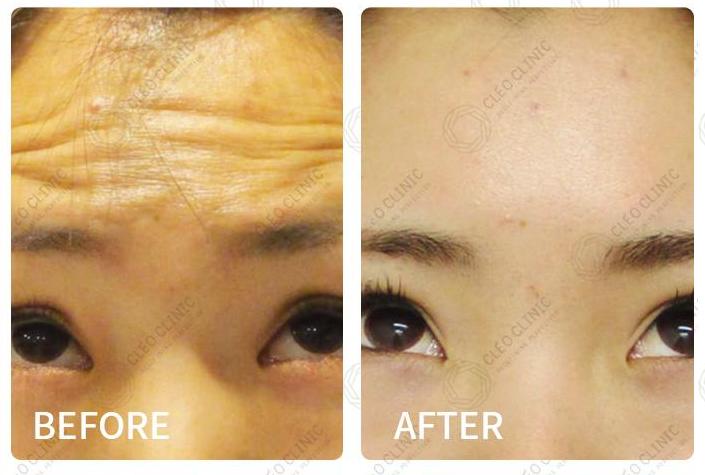
Botox treatment uses small injections of botulinum toxin type A to relax the muscles that create expression lines. As a result, lines on the forehead, between the brows and around the eyes can look softer while your face still moves. Importantly, Botox is a prescription-only medicine in Malaysia, so a doctor must assess you, prescribe it and give the injection.
At CLEO Clinic, our doctors plan each Botox injection around your muscles, your goals and your medical history. If you would like an assessment, you can book a consultation.

Botulinum toxin type A is a purified protein that blocks the nerve signal telling a muscle to contract. In turn, when the muscle relaxes, the skin over it creases less, so expression lines soften. These are called dynamic wrinkles, and our guide to dynamic wrinkles explains how they form. In contrast, lines that stay visible at rest are static wrinkles, and they often need other treatment, as our guide to static wrinkles explains.
However, Botox does not treat sun-damaged skin or volume loss. For this reason, it works well as one part of a plan, and our overview of wrinkles and fine lines covers the wider causes.

Botox (onabotulinumtoxinA) is the most widely known brand, but it is not the only one. For example, other botulinum toxin products include Dysport (abobotulinumtoxinA) and Xeomin (incobotulinumtoxinA). Importantly, units are not interchangeable between brands, so a dose for one product does not equal a dose for another. Your doctor chooses the product and dose, and our Botox vs Dysport vs Xeomin guide compares them in detail.
Botox is most often used on the upper face, but doctors also use it in other areas based on clinical judgement. Notably, some of these uses are off-label, which means they are outside the product’s approved indications, so your doctor should explain the benefits and risks first.
Forehead lines, frown lines between the brows (the “11s”) and crow’s feet are the most common areas. In practice, treating them together often gives a more balanced result. Our guides to crow’s feet and bunny lines cover these areas in more detail. In addition, a small dose can give a subtle brow lift, which may make tired eyes look more open.
Doctors may also treat a dimpled chin, a downturned smile, lip lines, a gummy smile and neck bands. In fact, these areas need precise dosing, because the muscles control speech and expression. For neck concerns, our guide on neck laxity options explains when Botox helps and when another treatment fits better.
Botox in the masseter muscle can slim a square jaw over several weeks, and it usually needs more units than facial lines. However, it is an off-label use, and chewing can feel weaker for a while. Therefore, read our jaw contouring facts before you decide.
Separately, botulinum toxin is also used for heavy underarm sweating, chronic migraine and some bladder conditions under specialist care. Our Malay guide on hiperhidrosis explains excessive sweating.

Crow’s feet around the eyes.
Bunny lines on the nose.
Lip lines, chin dimpling and a downturned smile.
Gummy smile.
Neck bands.
Jaw slimming (masseter).
Firstly, the cost depends on the number of units, the area, the product and the doctor. Next, most of the price comes from the units used, so a quote should state the units and the brand. The ranges below are general guidance for Botox-type units only, and your doctor decides the actual dose.
| Area | Typical units (general guidance) |
|---|---|
| Forehead lines | About 10 to 25 |
| Frown lines | About 10 to 25 |
| Crow’s feet | About 12 to 24 |
| Bunny lines | About 4 to 10 |
| Chin | About 4 to 8 |
| Full upper face | About 40 to 60 |
| Masseter (jaw slimming) | About 40 to 80 |
However, be careful with unusually cheap offers. For instance, they can mean diluted, counterfeit or unregistered product. Consequently, ask for an itemised written quote. For a full breakdown, read the Botox price guide per unit and area.
For the wider picture of why lines form and what else helps, read wrinkles and fine lines: causes and prevention.
Your doctor reviews your medical history, your medicines and any recent injectables before treatment. For example, blood thinners and some pain relievers, such as NSAIDs, can increase bruising, so mention them, but do not stop a prescribed medicine without your doctor’s advice. Similarly, tell your doctor about supplements and any Botox injection in the past few months. Avoid alcohol before treatment if your doctor advises it.
First, you sign a consent form and your doctor marks the injection points. Next, the skin is cleaned and the toxin is injected with a very fine needle. Most people feel only mild discomfort, so a local anaesthetic is usually not needed. The session takes around 20 to 30 minutes.
Results usually start within a few days and build over one to two weeks. They often last about 3 to 4 months, sometimes longer, and repeat treatments are usually spaced at least three months apart, according to Mayo Clinic. After that, your doctor reviews you about 2 to 3 weeks after the first treatment. For the full timeline, read how long Botox lasts.
Botox is generally well tolerated in suitable people when a trained doctor uses a genuine product. Still, every medicine carries risk, and the details are in our Botox side effects and safety guide.
Redness or small bumps at the injection points usually settle within a day or two. Similarly, mild bruising often fades within a few days. Some people have a mild headache, tightness or temporary stiffness. Less commonly, a drooping eyelid or brow can occur, and it is usually temporary.
The FDA medication guide for Botox warns that the toxin effect can rarely spread beyond the injection area, hours to weeks after treatment. Therefore, seek urgent medical care if you notice muscle weakness beyond the treated area, double or blurred vision, trouble speaking, swallowing or breathing, loss of bladder control or signs of an allergic reaction.
Botox is not suitable if you are pregnant or breastfeeding, if you are allergic to botulinum toxin or any ingredient, or if you have a skin infection at the injection site. Likewise, it is avoided if you have reacted to another botulinum toxin product before.
Neuromuscular conditions such as myasthenia gravis, ALS or Guillain-Barré syndrome need careful discussion with your doctor. Moreover, certain antibiotics, blood thinners and myasthenia gravis medicines can also interact with the toxin. In addition, a doctor should discuss expectations carefully with anyone who has body dysmorphic disorder or a tendency to keloids.
Aftercare is simple. First, stay upright for a few hours, and avoid rubbing or pressing the treated area for 24 hours. Afterwards, avoid strenuous exercise for at least 6 hours. You can usually return to work and wear light makeup the same day, unless your doctor advises otherwise. Finally, attend your review about 2 to 3 weeks later so your doctor can check the result.
Botox and other botulinum toxins are prescription medicines, so they should only be given by a registered doctor. Furthermore, you can check a product’s registration status through the National Pharmaceutical Regulatory Agency (NPRA) product search. In practice, ask to see the sealed vial, the brand and the batch number before treatment. The US CDC also gives practical advice on staying safe when getting botulinum toxin injections, including watching the doctor draw the product from a labelled vial. Be careful with prices far below other clinics, since they can signal a non-genuine product.
Botox relaxes muscles, while fillers add volume to folds and hollows. Therefore, deep folds or lost volume usually need dermal fillers rather than Botox, and our Juvéderm vs Botox guide explains how to choose. Meanwhile, some plans combine both, and our guide on how to combine Botox and Radiesse explains the order and timing, while our Radiesse treatment page covers the filler itself. For skin laxity without injections, see HIFU facelift or a face thread lift, and read Ultherapy Prime vs fillers and Botox. Our guide to dermal fillers and anti-wrinkle injectables gives a wider overview.



First, your doctor guides you through the procedure and takes written consent. You agree on the areas, the skin is cleaned and the toxin is injected with a fine needle. Also, local anaesthetic is usually not needed.
Overall, each session takes between 20 and 30 minutes.
The Botulinum Toxin treatment is a non-surgical, minimally invasive procedure. As a result, there is little to no downtime, although activities such as exercise should be avoided for at least 6 hours after the treatment. In fact, most people find that the injections cause only mild discomfort. Immediately after the injection, there may be mild swelling which usually subsides within 48 hours, and slight bruising is possible.
There is next to no downtime, although activities like exercise should be avoided for at least 6 hours after the treatment. In addition, the treated area should not be touched or rubbed for 24 hours, and a review with your doctor should take place 2 to 3 weeks after the first procedure to assess results.
This depends on the treatment area and your individual muscle strength, generally 4–10 units for smaller areas like bunny lines, up to 40–60 units for larger areas like the masseter muscles. Therefore, your doctor will confirm the right dosage for you during consultation, see the pricing table above for typical ranges by area.
They are considered safe for suitable people when given by a trained professional. Common side effects include pain, swelling or bruising at the site, headache and temporary droopy eyelids. Get urgent medical care for muscle weakness beyond the treated area, vision changes, difficulty speaking or swallowing, breathing problems, loss of bladder control or signs of an allergic reaction. Read more at Mayo Clinic.
It is not recommended if you are pregnant or breastfeeding, or allergic to botulinum toxin type A. Additionally, discuss it carefully if you have a neuromuscular disorder (such as myasthenia gravis, ALS or Guillain-Barré syndrome), a tendency to form keloids, a skin infection in the treatment area or body dysmorphic disorder. Furthermore, some medicines, including certain antibiotics, warfarin and myasthenia gravis medicines, interact with it.
Botox relaxes muscles to soften dynamic wrinkles. In contrast, dermal filler adds volume to static folds and hollows. In fact, many people combine both. Read our guide to dermal fillers and anti-wrinkle injectables, or see how to combine Botox and Radiesse.

Aesthetic Physician
Doctor of Medicine (M.D.) – MMA
Professional Diploma in Aesthetic Medicine
Specializes in non invasive aesthetic treatments including dermal fillers , thread lifting and anti wrinkles treatments.

Aesthetic Physician
Doctor of Medicine (M.D.) – MMA
Postgraduate Diploma in Dermatology in Clinical Practice – University of South Wales, UK
Professional Diploma in Aesthetic Medicine – AAA
Specializes in non invasive aesthetic treatments with an interest in skin diseases and acne treatments.




For more infomation please contact us at 014-6561883 or schedule
a free consultation by clicking on the button below.
Trusted by hundreds
satisfied clients 5⭐️ reviews on google